Bingo Cash
Papaya GamingBoard
3.351.00 Reviews
- Version
- 13.9.0
- Installs
- 10.00K
- Age Rating
- Everyone
Screenshots
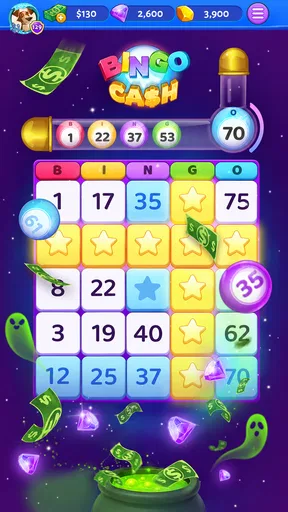
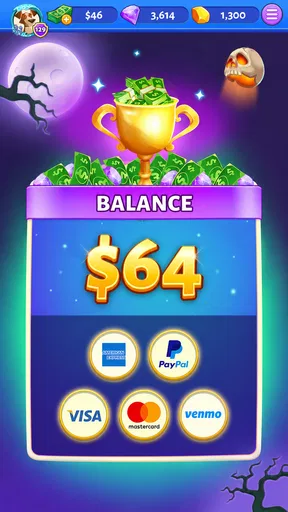

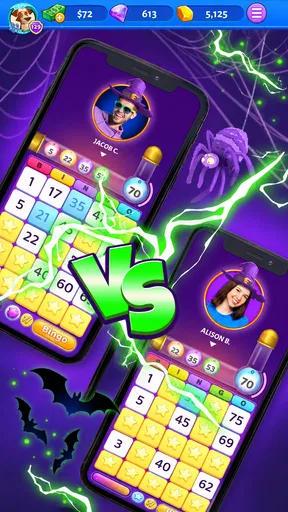




Our Review of Bingo Cash
 Analysis by Appyee
I tried Bingo Cash as a quick multiplayer board game rather than treating it like a traditional bingo caller running in the background. The main appeal is the live, skill-based tournament format: you are placed into a competitive session, watch the board develop, and make decisions under time pressure while trying to finish strongly. That gives it a more active feel than ordinary number bingo, although it also means the game asks for more attention than a relaxed family round.
It is free to download, made by Papaya Gaming, and listed for Everyone. The game has a 3.3 average from roughly one hundred ratings, with a little over fifty written reviews, so the public response is mixed rather than universally enthusiastic. I would read that as a reason to approach it with realistic expectations: the live competition is the point, but the format will not suit everyone.
How Bingo Cash fits into a shared household
The easiest way to understand the game is to imagine a quiet moment at home when one person has a few minutes to spare. Someone is waiting for dinner, taking a break from chores, or sitting beside another household member who is using the same device at a different time. Bingo Cash can fill that gap with a focused session instead of requiring a long campaign, a complicated ruleset, or a group physically gathered around the table.
That shared-device scenario needs a little discipline. I would not pass the phone back and forth during an active tournament, because each player needs to follow the board and act consistently. A better routine is to let one person finish a session, then hand over the device afterward. This sounds obvious, but competitive games become frustrating when another person interrupts at the exact moment a decision matters.
The game is also better for household members who enjoy watching one another compete than for people expecting a cooperative board game. The live multiplayer structure puts the emphasis on individual performance. You can encourage someone, compare how each round felt, or discuss decisions afterward, but that is different from sharing one team objective.
For a family looking for a calm, offline-style board experience, a physical bingo set or a turn-based digital board game may be a better match. Those alternatives make pauses easier and allow players to talk without worrying that a live round is moving on. Bingo Cash is more suitable when the household wants a short burst of concentration and accepts that the person playing needs uninterrupted attention.
What the first session feels like
The central loop is easy to grasp: follow the numbers, manage the board in front of you, and try to perform better than the other players in the tournament. I did not need a long explanation to understand the basic objective. The challenge comes from maintaining awareness while the round is unfolding, not from learning a dense rulebook.
That simplicity is useful when more than one person in a home wants to try it. A teenager or adult can usually understand the premise quickly, while an older relative who already knows bingo may recognize the basic rhythm immediately. The competitive layer is what changes the experience. It rewards attention and timing rather than simply waiting for a number to appear.
My practical advice is to begin when nobody is rushing you. Do not make the first attempt while preparing food, answering messages, or supervising another activity. The game may look casual because it is based on bingo, but the live format makes divided attention costly. A short uninterrupted trial gives a much fairer impression than a distracted one.
Another useful habit is to decide in advance who is playing and who is merely watching. On a shared phone, this avoids accidental taps and arguments over whose turn it is. If several people want to try it, rotate after a completed tournament rather than during one. That keeps each result connected to one player and makes comparisons more meaningful.
Keeping accounts and turns separate
Household sharing raises a question that does not matter as much with a single-player puzzle: whose progress and competitive activity are being represented? I would treat each person’s play as separate, even when the same phone is used. Avoid assuming that a result belongs to the household as a whole. The person holding the device should be the person making the decisions.
I would also avoid letting a child use an adult’s game access without the adult being present. The Everyone label describes the content rating, but it should not be treated as a substitute for household supervision or an automatic statement that every situation is appropriate. Parents and guardians still need to decide whether live competition fits the child’s age, maturity, and understanding.
There is a simple coordination method that works well: agree on a player name or household convention before anyone starts, keep the device with that player for the full session, and record results informally only if the family enjoys comparing them. This is not a feature claim about the game; it is a way to prevent confusion when one installation is used by several people.
If two household members want completely independent histories, preferences, or routines, a shared device may become inconvenient. In that case, separate devices and clearly separated access are less confusing than trying to make one copy serve everyone. Bingo Cash is easy to sample together, but shared use should not blur who is actually participating.
Competition, concentration, and the real trade-off
The strongest part of the game is the feeling that a familiar board activity has been turned into a live contest. Instead of treating bingo as background entertainment, I found myself watching the board more carefully and thinking about the consequences of missing a moment. That creates energy, especially for players who like leaderboards, tournaments, and quick decisions.
The same design can be the main weakness. Anyone looking for a slow, social game may find the live structure demanding. A physical bingo game lets the caller pause, repeat a number, or wait while someone talks. A standard digital bingo app may feel more forgiving if its purpose is simply relaxation. Bingo Cash asks you to stay engaged, which is a strength for competitive players and a burden for casual ones.
The word “skill-based” also matters to how I would recommend it. I would not install this expecting pure luck or a passive number-matching experience. The player’s attention and choices are part of the appeal. That does not mean every outcome will feel fully controllable; bingo still has an element of chance in the numbers that appear. The useful distinction is that the game presents itself as an active contest, not merely a digital ticket.
Because the store summary refers to competing for real winnings, I would be especially careful before treating the game as a source of income or as a harmless household wager. A game can be free to install while still requiring players to think carefully about the meaning of competition, eligibility, and any in-game decisions presented during use. I would never encourage a child to participate in money-related play, and adults should set a firm personal limit before starting.
For me, that is the most important trade-off: the competitive presentation makes the game more exciting than ordinary bingo, but it also makes responsible boundaries more important. If you want a no-pressure pastime, choose a conventional board game. If you enjoy live contests and can keep the activity within sensible limits, this format has a clearer purpose.
Age, trust, and playing around other people
The Everyone rating makes the game broadly approachable from a content perspective, but a household decision involves more than the label. Parents should explain that a board game connected to competition is not automatically the same as a toy, particularly when the description emphasizes real winnings. A child may understand the bingo mechanics without understanding the financial or competitive implications around them.
I would keep adult participation visible rather than handing over the phone and assuming the rating settles the matter. That is especially sensible when a younger player is curious because an older family member is playing. Letting them watch can be a useful first step, followed by a conversation about what the tournament is trying to do and why adults are responsible for any decisions related to it.
Trust also matters between adults sharing a device. Nobody should start a session under another person’s name without agreement, and nobody should assume that a good result belongs to them just because they were holding the phone at the end. Clear boundaries prevent small misunderstandings from becoming disputes about performance or participation.
I would also avoid making the game a household test of intelligence. Bingo Cash rewards engagement with its particular format, but a weaker result does not mean someone is less capable. Different players may prefer different tempos, and someone who excels at a quiet strategy game may dislike a live bingo tournament. Keeping that distinction clear makes shared play more enjoyable.
Who will enjoy it, and who should skip it
I would recommend Bingo Cash to adults who already like bingo but want a more competitive online setting. It is also worth trying for players who enjoy short, focused multiplayer contests and do not mind that the game requires attention while the round is active. The board-game category is familiar enough to make the entry point approachable, while the tournament framing gives experienced players a reason to take each session seriously.
I would be more cautious recommending it to someone seeking a quiet game for winding down. It is not my first choice for a passenger who wants something completely passive, a family that needs frequent pauses, or a player who dislikes competitive pressure. It is also a poor fit for anyone who may interpret “win” as a promise of dependable money rather than a description of the game’s competitive aim.
Players who prefer traditional bingo should decide whether they want the live contest at all. The usual alternatives offer a more relaxed pace, clearer social interaction, or a physical shared experience. Bingo Cash is preferable when the attraction is the tournament itself. If the attraction is simply marking numbers with friends, a conventional bingo app or physical set may deliver that feeling with less friction.
Device expectations and ongoing use
The game requires Android 9 or later, so an older phone may be the first practical obstacle. On a compatible device, I would still reserve enough battery and avoid starting a session when the phone is likely to be interrupted by another urgent task. Live play is more sensitive to interruptions than a puzzle that can be paused safely.
The current version shown for the game is 13.9.0. That tells me the project is being maintained through numbered releases, but I would not use the version alone as a reason to expect a particular feature or performance level. The more useful question is whether the game fits your routine: can you give it an uninterrupted window, and do you actually enjoy the competitive format?
Its reach is still modest, with more than ten thousand installs, and the 3.3 average suggests that the experience has not landed equally well for everyone. I would treat that combination as a prompt to try it personally rather than relying on popularity as proof. The free entry makes sampling easier, but free does not remove the need to pay attention to how the game affects your time or decisions.
When I review a game like this, I look for a repeatable reason to return. Here, that reason is not a story, collection system, or long progression path; it is the changing challenge of live tournament play. If you enjoy measuring your concentration against other players, that can be enough. If you need unlocks, exploration, or a strong solo arc, you may run out of reasons to continue sooner.
My household verdict
Bingo Cash works best as a clearly bounded competitive activity: one person plays, everyone else knows whose session it is, and adults keep the money-related context firmly in view. In that setting, the game offers a more active take on bingo and can be a fun way to use a spare moment. The simple rules make it approachable, while the live tournament structure gives the familiar board format some tension.
I would not present it to a household as a universal family game. The Everyone rating makes it broadly accessible in content terms, but the live competition and real-winning language call for adult judgment. For younger players, watching and discussing the game is safer than assuming they should participate. For shared devices, separate turns and clear account boundaries are more important than squeezing everyone into one session.
My final recommendation is conditional but positive: try it if you want focused multiplayer bingo with a competitive edge, and keep the first session short enough to judge the format honestly. Skip it in favor of traditional bingo or a slower board game if your priority is conversation, pausing, or completely predictable stakes. The game has a distinct identity, but that identity only works when the household understands what it is choosing: not just bingo, but live competition that deserves attention and sensible limits.
Verdict
Strengths of Bingo Cash
- Simple bingo gameplay that is easy for beginners to understand.
- Short rounds make it convenient for quick gaming sessions.
- Bright visuals and clear controls improve the overall experience.
- Multiple game modes can add variety beyond standard bingo rounds.
- Progress rewards may encourage regular play and continued engagement.
Limitations of Bingo Cash
- Cash-related features may vary by country and eligibility requirements.
- Some rewards or bonuses can require watching ads or completing tasks.
- In-app purchases may appeal to frequent players seeking faster progress.
- Results depend heavily on chance, so winnings are not guaranteed.
- The app may require a stable internet connection during gameplay.
Similar Picks in This Category
View All
Ludo King®
Gametion4.1

Ludo
Yarsa Games4.6

Tile Master® - Matching Game
Higgs Studio3.6

Checkers Online
CC Games4.6

Dominoes
Loop Games4.7

Chess
Chess Prince4.6
Frequently Asked Questions
What is Bingo Cash and how does the game work?
Bingo Cash is a mobile bingo-style game built around completing bingo cards during timed rounds. Players usually mark matching numbers as they are called, aim to complete winning patterns, and may receive coins, points, tickets, or other in-game rewards. The exact rules, available modes, and reward system can vary by version, region, and current promotions, so reviewing the in-app instructions before playing is recommended.
Is Bingo Cash a real-money gambling app or can I play for free?
Bingo Cash may offer free gameplay, but some versions can also include optional purchases, prize-related features, or cash-style competitions. Availability and legality depend on your location, age, and the specific app version. Do not assume that advertised rewards are guaranteed cash. Check the official store listing, terms, withdrawal rules, and local regulations before depositing money or participating in any paid contest.
Can I really withdraw money or prizes from Bingo Cash?
Withdrawal options depend on the version of Bingo Cash and the country where you use it. Some users may receive only virtual rewards, while other versions may advertise cash tournaments or redeemable prizes. Before spending money, confirm the minimum withdrawal amount, supported payment methods, identity verification requirements, processing times, fees, and any restrictions. Promotional balances may also have conditions that must be completed first.
Is Bingo Cash safe to download and use on Android or iPhone?
The safest way to install Bingo Cash is through the official Google Play Store or Apple App Store, rather than downloading modified APK files or unknown third-party packages. Before installing, check the developer name, recent reviews, requested permissions, privacy policy, and update history. Avoid sharing unnecessary personal or payment information, and use strong account credentials if the app requires registration.
Does Bingo Cash require an internet connection, and are there age restrictions?
Bingo Cash generally requires an internet connection for account access, game sessions, advertisements, leaderboards, updates, and reward tracking. Offline play may be limited or unavailable. Age restrictions can apply, particularly if the app includes purchases, competitions, or cash-prize features. Parents should review the store rating, privacy settings, and payment controls before allowing children to install or use the application.
Play our best games!


